

Grapple Hook
Traversal & Physics-Based Gameplay System


Project Type: Gameplay & Systems Engeneering
Engine: Unreal Engine 5
Focus: 3D aerial traversal · Modular gameplay mechanic · Physics stability
Status: Prototype

Overview
Physics-based traversal is expressive but unstable and performance-sensitive.
Traversal mechanics often define how players experience space, momentum, and control. Poorly designed systems can feel inconsistent across hardware, while overly constrained solutions limit player expression.
The Grappling Hook project was built to explore a flexible traversal mechanic that enables 3D aerial movement while remaining readable, tunable, and performant. The goal was to design a system that could be reused across characters, extended through upgrades, and balanced against the realities of physics-based gameplay.
The system was designed around three core principles:
Expressive traversal that rewards timing and positioning
Modularity, allowing the mechanic to be reused by players and NPCs
Extensibility, supporting upgrades that alter behaviour and feel
Rather than scripting fixed traversal paths, the grappling hook treats movement as a physical interaction between the player, the environment, and the hook itself.
Links
Approach
Concept & Feasibility
We began with rough visual sketches and early mathematical modelling to identify the key variables involved in grappling-based movement, including arc behaviour, momentum, and distance constraints.
This phase helped establish realistic expectations for how the system would feel in motion before implementation began.
Prototype Implementation
1
Modularity & Upgrades
Validation & Iteration
2
Initial implementation was done directly within the player blueprint to iterate quickly on feel, responsiveness, and control. Once the core behaviour was validated, the logic was migrated into a dedicated Actor Component to support modular reuse.
This separation allowed the system to be attached to different characters without tight coupling to player-specific logic.
The grappling hook was designed as a transferable item, enabling use by both player characters and NPCs. Upgrade modules could be combined to alter functionality, allowing the system to evolve without rewriting its core behaviour.
This approach supported experimentation while maintaining a stable foundation.
Testing prioritised movement consistency, edge cases, and behaviour under variable frame conditions. Particular attention was given to physics timing and update order to reduce instability during frame drops.
3
4
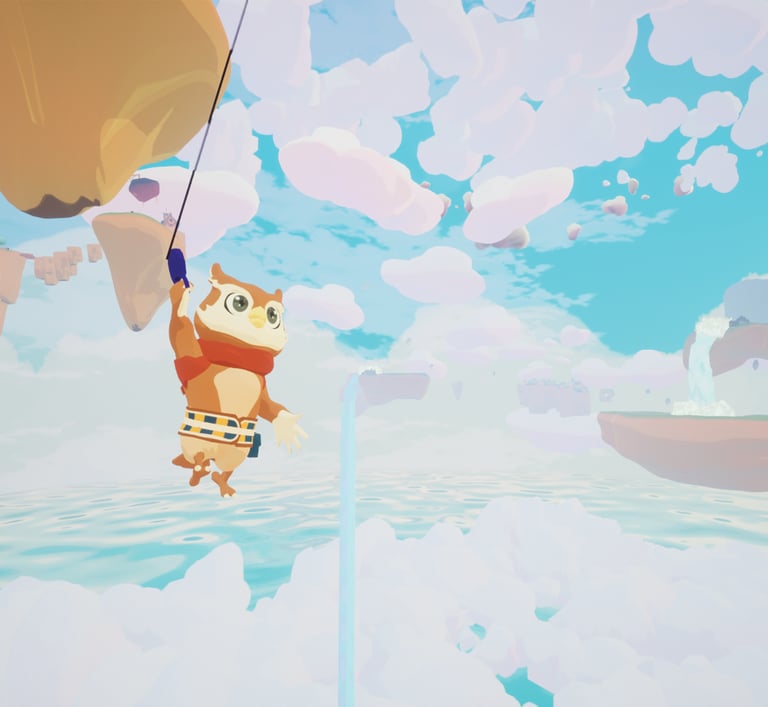
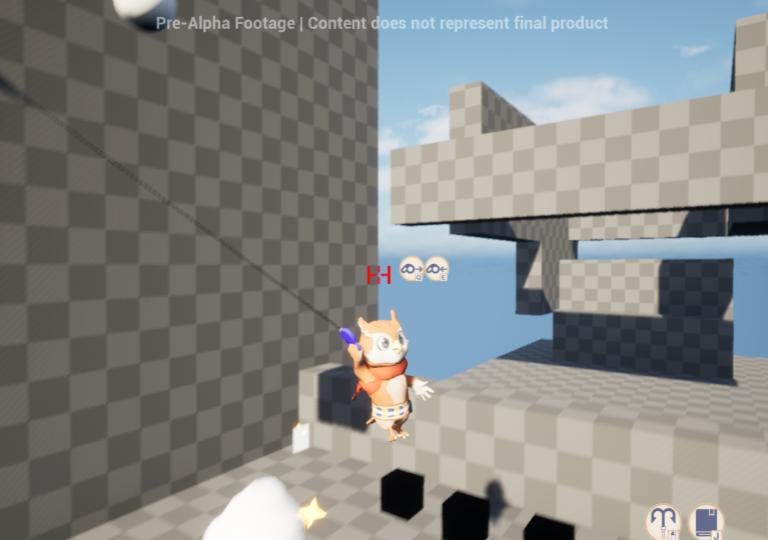
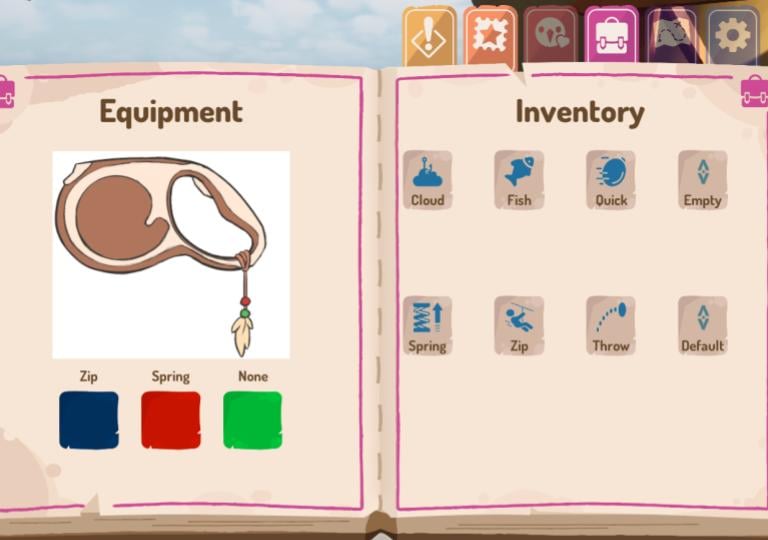
Mid-air grapple traversal test
Hook attachment validation
Equipment & Inventory Integration
Outcome
The prototype successfully delivered a flexible traversal mechanic capable of supporting expressive aerial movement while remaining modular and extensible.
Key outcomes included:
A reusable grappling hook system implemented as an independent Actor Component
Support for upgrade-driven behaviour changes without altering core logic
Identification of physics and frame-dependence risks inherent to traversal mechanics
A clear understanding of performance trade-offs tied to tick-based and physics-driven updates
The system prioritised mechanical clarity and extensibility over content scale.
Evaluation & Recommendations
Physics-based traversal mechanics are highly sensitive to update timing and frame rate. Early versions of the system relied heavily on tick-based calculations, which introduced instability during severe frame drops.
To mitigate this, the system transitioned to physics sub-step updates, allowing core calculations to run independently of the render frame rate and improving consistency across hardware.
For future iterations, recommended considerations include:
Early performance profiling for physics-heavy mechanics
Careful balancing of flexibility versus computational cost
Preserving modular boundaries to support iteration and reuse
These findings reinforce the importance of validating traversal systems early, before committing them to large-scale production.
© 2026. All rights reserved.