

Limbs & Clock
Modular Gameplay Systems Prototype


Project Type: Gameplay Mechanics Prototype
Engine: Unreal Engine 5
Focus: Limb health · Non-lethal combat options · Time sequencing
Status: Prototype / R&D

Overview
Limbs & Clock is a gameplay systems prototype exploring modular, data-driven mechanics built for rapid iteration and extensibility.
The project combines two independent systems: a limb health system and a digital clock sequencer, developed to test system scalability, state management, and designer-friendly control in Unreal Engine.
While functionally separate, both systems focus on clarity, modularity, and ease of tuning, serving as foundations for more complex gameplay mechanics.
Links
Approach
Exploration & Constraints
Limbs & Clock was scoped intentionally small to allow fast validation of mechanical ideas without introducing unnecessary complexity. The focus was on observing how small systemic changes could affect player behaviour, rather than building a complete combat or timing framework.
Visual polish, UI, and balancing were deliberately deprioritised to keep iteration cycles short and outcomes easy to evaluate.
System Design
1
Prototype Implementation
Validation & Learnings
2
The limb health system was designed around limb-specific state rather than a single global health pool. Damage and impairment were tracked per limb, allowing combat outcomes to be influenced by functionality loss instead of outright lethality.
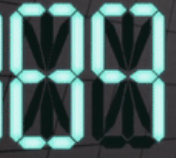
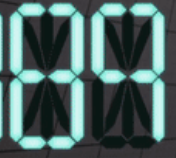
In parallel, the digital clock sequencer was designed as a modular, time-driven system capable of triggering events based on clock state, independent of combat logic or player systems.
Both systems were implemented with minimal dependencies to keep behaviour easy to reason about and adjust. The limb system applied simple state changes and thresholds to observe impact on combat flow, while the clock sequencer focused on clean state transitions and event triggering. Implementation favoured clarity and extensibility over optimisation, ensuring the prototype could be easily expanded or discarded based on findings.
Testing focused on observing behavioural outcomes rather than measuring performance or balance. Limb-specific damage proved effective in encouraging alternative combat decisions, while the clock sequencer demonstrated usefulness as a general-purpose timing and sequencing tool.
The prototype confirmed that lightweight systems can surface valuable design insights early, without the overhead of full production pipelines.
3
4
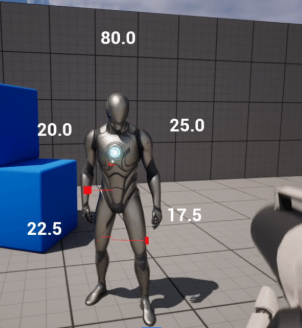
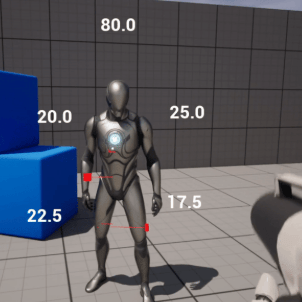
Per-limb health visualisation
Digital clock sequencer prototype
Outcome
Limbs & Clock validated two small prototype systems in a controlled sandbox: a limb-based health model for more varied combat outcomes, and a digital clock sequencer for time-driven event logic.
Outcomes
Confirmed limb-specific damage as a meaningful alternative to a single health pool
Supported non-lethal combat outcomes through limb impairment modelling
Produced a reusable clock sequencer prototype suitable for timing and scheduling tasks
Kept both systems lightweight and modular for future extension
Evaluation & Recommendations
This project was intentionally exploratory. The value came from validating small mechanics early, keeping implementation minimal, and clarifying what would be required for production adoption.
Recommendations
If productionised, define clear rules for limb impairment thresholds and balancing constraints
Add basic debugging / visualisation tools for limb state and sequencer events
If reused broadly, enforce modular boundaries and consider performance implications early
© 2026. All rights reserved.